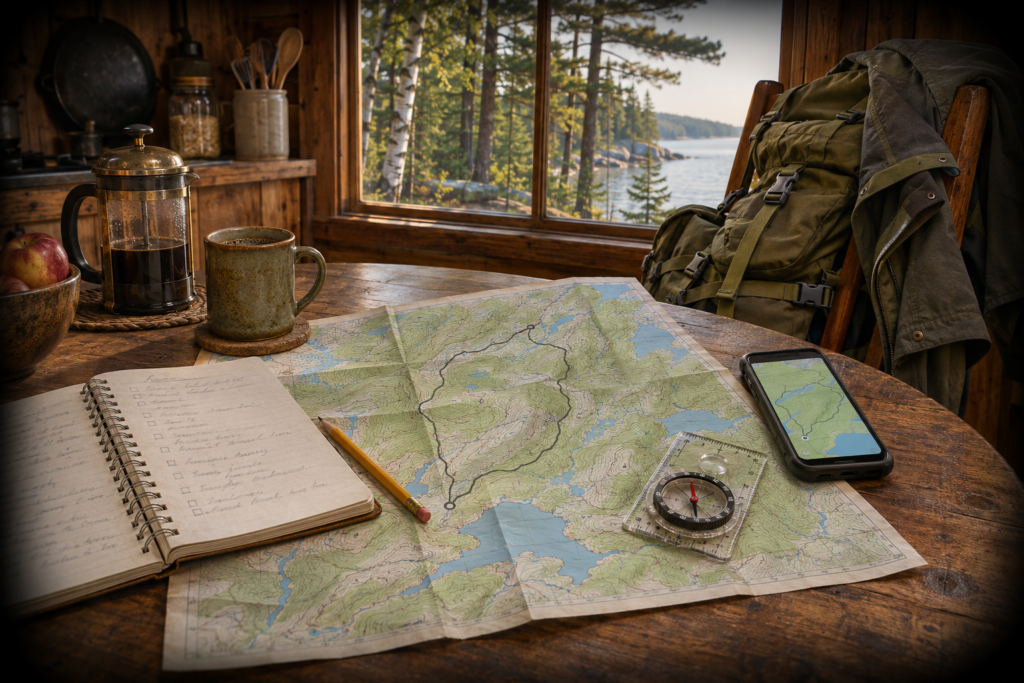
A day outdoors usually begins with a simple intention: walk a trail, explore somewhere new, or spend a few hours away from the noise. Nobody sets off expecting a broken ankle, a missed junction, or an unexpectedly long walk back.
Preparation starts before you shoulder your pack. One of the most useful things you can leave behind is a clear account of where you intend to go and when someone should expect to hear from you.
Leave More Than “I’m Going Hiking”
“I’m heading into the woods” tells someone very little if you fail to return.
Leave your plan with a reliable person who knows you expect them to act if you do not check in. A note sitting on your kitchen table is less useful if nobody knows it exists.
Your route
Include your starting point, intended route, destination, and planned exit. Use trail names, junctions, and a marked map where possible. If you expect to explore a particular area rather than follow a fixed trail, explain its boundaries.
Add your vehicle description, registration, and parking location. Someone should be able to understand where your day began without having to guess which entrance you used.
Your return arrangements
Distinguish between when you expect to finish and when your contact should act.
“I should be back around five” leaves room for uncertainty. Explain when you will check in, what to do if that check-in is missed, and which local emergency service or land-management contact is appropriate for the location.
Agree those arrangements beforehand. Your contact should not have to decide whether you meant five o’clock at the trailhead or five o’clock at home.
Plan Around the Day You Actually Have
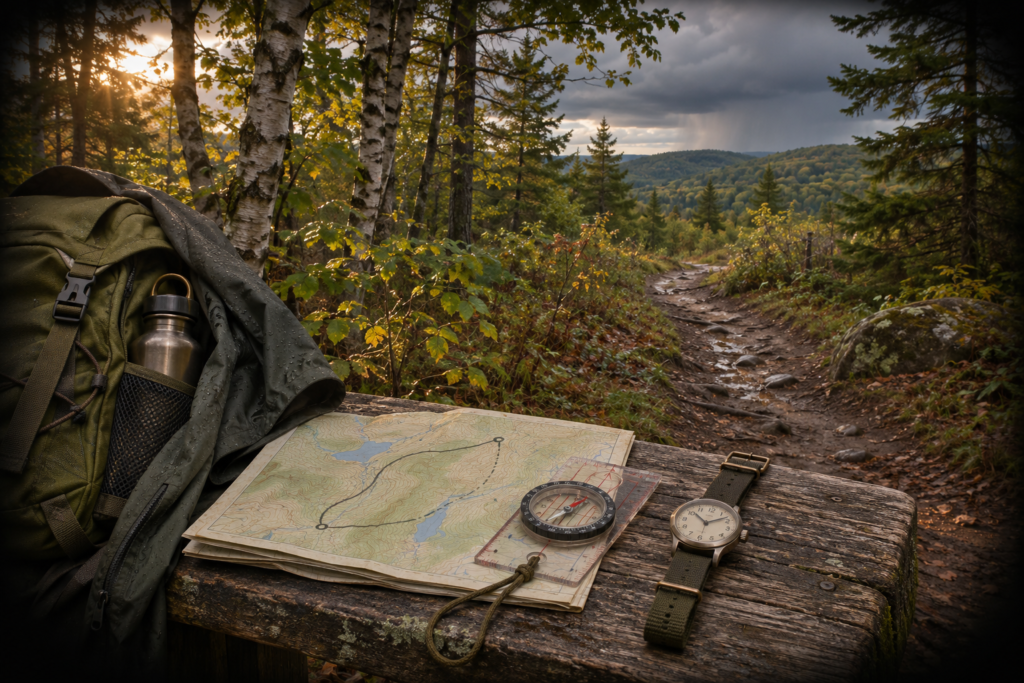 A route that looks manageable on a screen may take considerably longer on the ground. Mud, snow, fallen trees, steep terrain, and navigation stops all affect progress.
So do photography stops, tired legs, and the pace of the slowest person in the group.
Allow time for those realities. Check the forecast, available daylight, and current notices from the people responsible for the area. Identify places where you can shorten the route or turn back.
A turnaround time is useful only if you are willing to honor it. Reaching a viewpoint is optional; getting everyone home is the objective.
Treat Your Phone as One Part of the Plan
A phone can carry maps, help establish your location, and provide a way to call for assistance. It can also run out of power, lose signal, become damaged, or get lost.
Download the relevant maps before leaving and check that you can open them without a connection. Carry an appropriate backup power source and protect the device from the conditions.
A paper map and compass provide another option, provided you know how to use them. Equipment earns its place through your ability to use it.
Do not build a plan that depends entirely on making a call from somewhere you have never checked for coverage.
If Your Plans Change, Update Your Contact
Changing your route without telling anyone makes the original plan less useful.
Where communication is available, send the revised route and return arrangements before making a substantial change. Make sure your contact acknowledges the update; a message that has not arrived cannot help them.
If you cannot communicate, remember that the person holding your plan still expects you to follow it. Consider that consequence before adding an unplanned detour or changing your exit point.
Close the Loop When You Return
Let your contact know when you are safely out.
Make that check-in part of finishing the trip, alongside putting your equipment away. Otherwise, someone may be left worrying—or seeking assistance—after you have already gone home.
A useful trip plan does not need to be elaborate. It needs to be understandable, realistic, and left with someone who knows what to do with it.
Before your next outing, ask yourself one question: if I do not come back when expected, does anyone have enough information to help?